
The Educators’ Pause
The Educators' Pause is a regular column for the CHA Academic Newsletter. It has three components:
A Story: about a meaningful moment in medical education
A Question: that invites community conversation
A Conversation: Select reader reflections will be shared in the subsequent installment
The Story: What matters most when teaching in the ICU
The Intensive Care Unit can be, well, intense. Excitement, terror, sadness, awe, frustration–I’ve experienced the full range of emotions in my work as an intensivist. While a small minority of our resident trainees at CHA will ultimately practice in the ICU, our internal medicine, family medicine, and transitional year residents all spend time there. As an educator in the ICU, I’m often asking myself, “What do I want my learners to take away from this experience?”
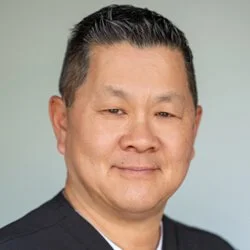
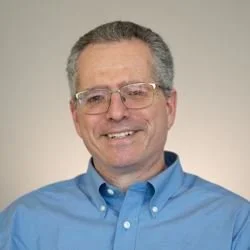
I recently spent two weeks on service in the Cambridge ICU with a stellar resident team–Tyler Schaeffer, a senior resident in internal medicine and soon-to-be chief resident, and Michael Zimmerman, a transitional year intern headed into occupational and environmental medicine.
During our two weeks together, working alongside expert nurses, respiratory therapists, and consulting teams, we provided life-saving interventions for patients in hemorrhagic shock and septic shock. These cases provided ready teaching points. We talked preload and afterload, systemic vascular resistance and mean arterial pressure. We tailored our treatments to these physiologic principles and our patients got better. This was the exciting and super gratifying side of intensive care. It’s what the textbooks would have you imagine we spend most of our time doing.
In reality, only a handful of our patients had such clearly identifiable and treatable pathologies. We spent much more energy contemplating insidious health issues like frailty, malnutrition, delirium, and the limits of physiologic reserve. We strove to understand our patients’ pathophysiology so that we could situate their present critical illnesses in the larger narratives of their lives. We worked our way through tough questions: How do we build a therapeutic alliance with a family that is scattered across the country? How do we communicate hope while sharing realistic prognostic information? How much do we defer to a surrogate decision-maker when we fear their decisions may cause more harm than good to the patient? Tyler and Michael spent hours talking with families–working to build trust, mediate conflicts, and discern what matters most to our patients and their families. We cared for three families in similar situations and yet the philosophy of care for each patient, in the end, was distinct.
It is these humanistic gray areas that I find most rewarding to delve into with learners, especially learners who don’t anticipate working in the ICU setting in their careers.Because ultimately what we’re drilling down to are core principles of good patient care like centering the patient, not the disease; balancing humility, hope, and truthtelling; and accepting that in medicine, as in life, so much is outside of our control. This is the art of medicine.
“Teaching” the gray areas doesn’t happen with a well rehearsed chalk talk. Alongside effective role modelling, for me, it’s about creating space for team members’ voices to be heard and valued so they can think things through for themselves. The most effective way to open these conversations, I believe, is by being a little bit vulnerable. I was honest with Tyler and Michael when I didn’t know what to do, which was often. As we debriefed family meetings together, I shared the emotions that the meetings stirred up for me, even the feelings I was not proud of. And then I listened. I learned so much from Tyler and Michael–gaining new insights into our patients and their care, and into them as people and as doctors. My hope with this approach to teaching is that it fosters a sense of meaning and belonging in the ICU. In such an intense environment, I believe that’s essential.
The question: Recall a time when you learned to center the patient and not their disease. What helped or got in the way of learning that lesson? How do you convey this lesson to learners?
Discuss the question with colleagues and learners!
And I’d love to hear from you! Reply here with your reflection (you can do so anonymously if you prefer).
Community Responses from the last Educators’ Pause Reflection Question:
What is something a student or learner taught you while you were teaching? It could be as small as an EPIC hack, as big as a perspective shift, or anything in between.
“I was a Chief resident in Surgery making rounds on patients. We came to a patient who had surgical drains. The kind that go to bulb suction. I prepared the patient and got ready to pull the drain. I had cut the stitch holding it in place and I popped or opened the bulb to release any suction in the tube. As I was about to pull it to show the Interns how to do it. Something I had done 100 times by my Chief year. An intern said to me…”there’s still negative pressure in the tube” I said “no there’s not”. He grabbed the suture scissors and cut a small Knick in the tubing and sure enough some pressure released and it decompressed the fluid in the tube. It really surprised me. That's when I thought to myself. Wow you think you know everything and every once in a while someone new, even an intern, can teach you something.” –Albert Ko, Staff Surgeon
“I've recently started precepting residents in the primary care clinic, 15 years after I myself finished residency. It's given me a perspective on the depth of our specialized knowledge and the time it takes to learn what we need to know as clinicians. I've been struck by how often I've heard from a resident "This is the first time I've seen this" - sometimes for very simple things, say sinusitis. It's given me pause to reflect on the breadth of knowledge needed in our profession, and the the long learning curve we're on to earn that knowledge” –Joel Sawady, Primary Care Physician
“As an attending, in many cases, I get quite jaded… External concerns get a foot in the door and then cynicism throws its entire grim nature straight through the opening. Everything becomes dark. The ultrasound shows flickering shadows, but I cannot find my needle. The easiest way for me to resist that and to ground myself in the moment is just to sit back and let the residents talk. The CHA residents are so often present, so often bursting with compassion. I can use that as a guide wire and find my way back to my own cavo-atrial junction.” –Lakshman Swamy, Pulmonary and Critical Care Physician

Bio: Colleen Farrell, MD, is a pulmonary and critical care physician, medical educator, and writer. She teaches CHA residents in our ICUs and Harvard Medical students in their medical ethics courses. Her reflective writing on medical training and practice has been widely published and is available at colleenmfarrell.com.
CHA Residents featured in The Story:

Tyler Schaeffer, MD

Michael Zimmerman, MD
