
The Educators' Pause is a regular column for the CHA Academic Newsletter. It has three components:
A Story: about a meaningful moment in medical education
A Question: that invites community conversation
A Conversation: Select reader reflections will be shared in the subsequent installment
Fall 2026 Academic Newsletter installment:
The Story: How My Vacation in Germany Rekindled my Childlike Wonder of Medicine
For two weeks this August, I fully unplugged from work and travelled with my husband and two sons, ages four and two, to Germany. My husband spent his childhood summers visiting his mother’s Bavarian hometown and the surrounding cities, villages, and mountains. He planned an itinerary that would introduce our kids to castles and medieval cities that had ignited his imagination as a child.
I mostly took the backseat on planning. But while we were in the city of Würzburg, I learned that this was where physicist Wilhelm Conrad Röntgen (1845–1923) discovered x-rays, for which he was awarded the Nobel Prize in 1901. The university maintains a small museum in its former Institute of Physics dedicated to this discovery and its impact on the world of modern medicine. I needed to go. Not just to learn, but to pay homage. Imagining my job as a pulmonologist and intensivist without x-rays and CT scans (which use x-rays) is impossible. Beyond being a critical diagnostic tool, the ubiquity of x-ray technology has fundamentally informed how I conceptualize the human body. And so we went, double stroller and all.
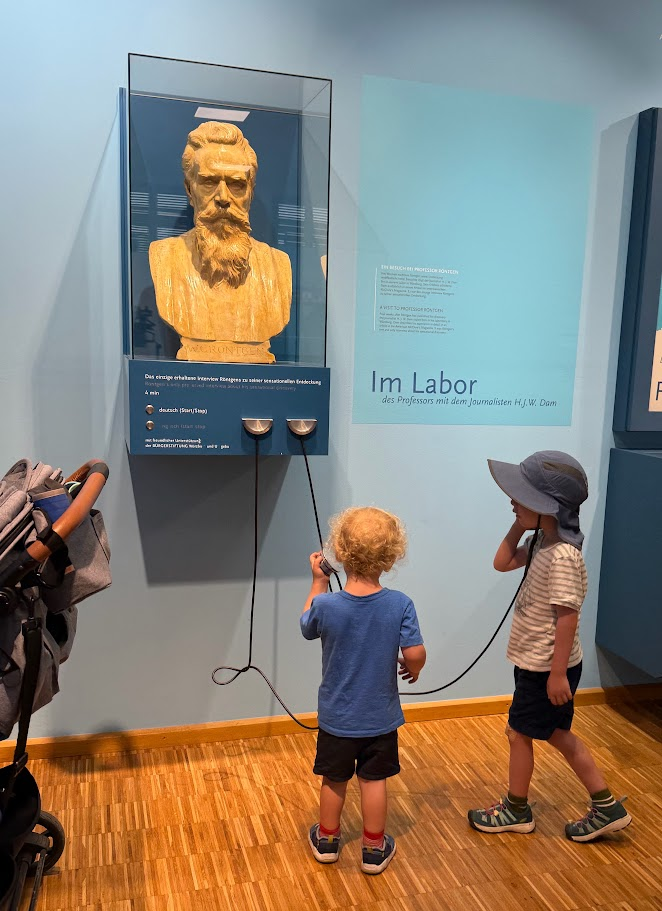
My four-year-old and I had talked about x-rays before. When he was two he fell and broke his front tooth straight down the middle. I snapped a photo of the x-ray the dentist took and included it in our family photobook. I’ve explained how this special picture lets us see the part of his tooth that is behind his pink gums. I’ve told him that x-rays of patients’ chests and lungs help me know how to make them feel better. And so it was perfect that while in Würzburg we could learn about how a person with intense curiosity and deep commitment figured out how to take these pictures.
Presenting the history this way, it felt magical, just like the castles and shining armor of knights we saw elsewhere on our trip. It’s a kind of medical history I generally avoid. As an amateur historian, I’ve spent time in archives learning about the first ICUs and the early AIDS epidemic. I’ve always been more interested in the social construction of medical knowledge, how ideas about gender, race, and sexuality inform what is presented as hard fact, than in what individual people have discovered or invented. And yet here I was, enthralled to learn about Röntgen and his discovery.
And so in Würzburg, while technically unplugged from work, I imagined myself back in the ICU where I teach our residents. I wondered if I’ve neglected to impart this childlike sense of wonder at the science of modern medicine. There is so much wrong in our increasingly corporatized and inequitable healthcare system about which I can speak ad nauseum. And yet, when I stop and think about it, that we can take pictures that allow us to see inside the human body is nothing short of remarkable. Perhaps “stop and admire the x-ray” is a worthwhile mantra for the modern clinician.
Community Question: What in medicine ignites your childlike sense of wonder? How do you share that with your learners?
Discuss the question with colleagues and learners!
And I’d love to hear from you! Reply here with your reflection - (you can do so anonymously if you prefer).
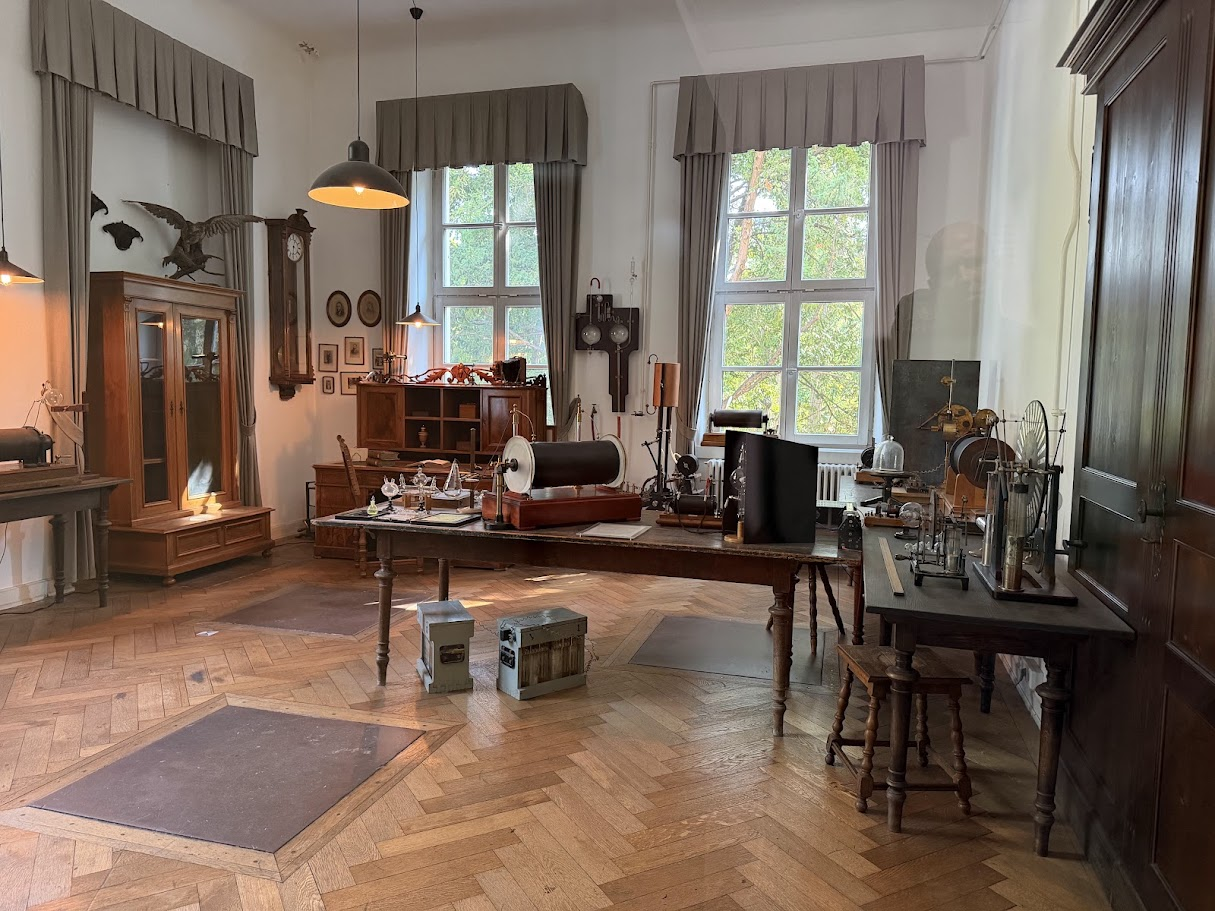
Top photo: The room where Röntgen conducted his experiments. Right-hand photo: My kids listening to a recorded interview with Röntgen.
Community Responses from the Summer 2026 Educators’ Pause Reflection Question:
The question: Recall a time when you learned to center the patient and not their disease. What helped or got in the way of learning that lesson? How do you convey this lesson to learners?
Several community members shared deeply thoughtful responses to last quarter's question, which are excerpted below. We are currently brainstorming ways to make community engagement more interactive.
“My lesson to learners is that our relationship with the patient is the anchor to any advice we have about diagnostic or treatment plans. Our relationship to patients is about knowing them and their experiences especially when we don't understand the decisions they make - it is being able to see that perspective and earn trust.” - Yamini Saravanan MD, primary care physician, associate director Cambridge Integrated Clerkship
“As a newer nurse I kept butting heads with him over his ‘noncompliance.’ …until I realized that I had to give up the power struggle. This was not my journey, it was his. So I stopped arguing with him and decided to just listen.” - Rebecca Sweeney, RN Associate Chief Care Management
“Larry had complicated heart failure and an AICD that had discharged several times while he was fully conscious... Eventually he requested his AICD be deactivated, and stopped all of his medicines. A few weeks later he died peacefully with his partner by his side. I have shared Larry's story for the past 5 years during the first week of medical school at HMS - because the medicine is only useful if it supports the wholeness of our patients. And sometimes the absence of medicine is how we can be the best healers.” - Kathe Miller MD, Family doc and medical student educator at HMS
“I walked back to the resident work room thinking to myself. This man wasn't being difficult. He wasn't being mean. He was just different and I was ascribing all this meaning.” – Priyank Jain MD, hospitalist, APD IM residency
“Early in my career, I would have taken the anger personally, absorbed it, and blamed myself for not having the right answers or the right words to assuage their fear. But now, I have a mantra: “This is this person’s worst day.” …Some people cope with fear with gratitude for those helping them, but some cope with fear by expressing anger at the world, at their lot in life, or at the people around them. This rawness is part of being human.” - Jess Hoy MD, Hospitalist
“All of my time with him was spent in a hospital room. Almost all of his life he was somewhere else. I try to remember, and to pass on to my team, that we are at a critical but brief time in our patients lives. Our demeanor and attention matter more to the human in front of us than the things I feel I “should” be doing.” - Jesse Bossingham MD, Chief Medicine Resident
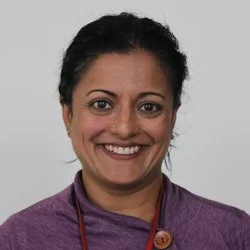
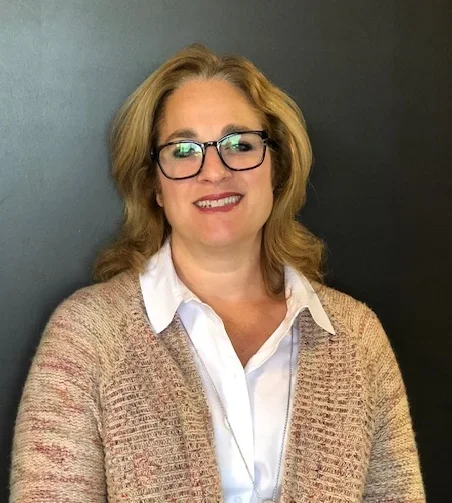


Bio: Colleen Farrell, MD, is a pulmonary and critical care physician, medical educator, and writer. She teaches CHA residents in our ICUs and Harvard Medical students in their medical ethics courses. Her reflective writing on medical training and practice has been widely published and is available at colleenmfarrell.com.
Educators’ Pause Column Archives:
